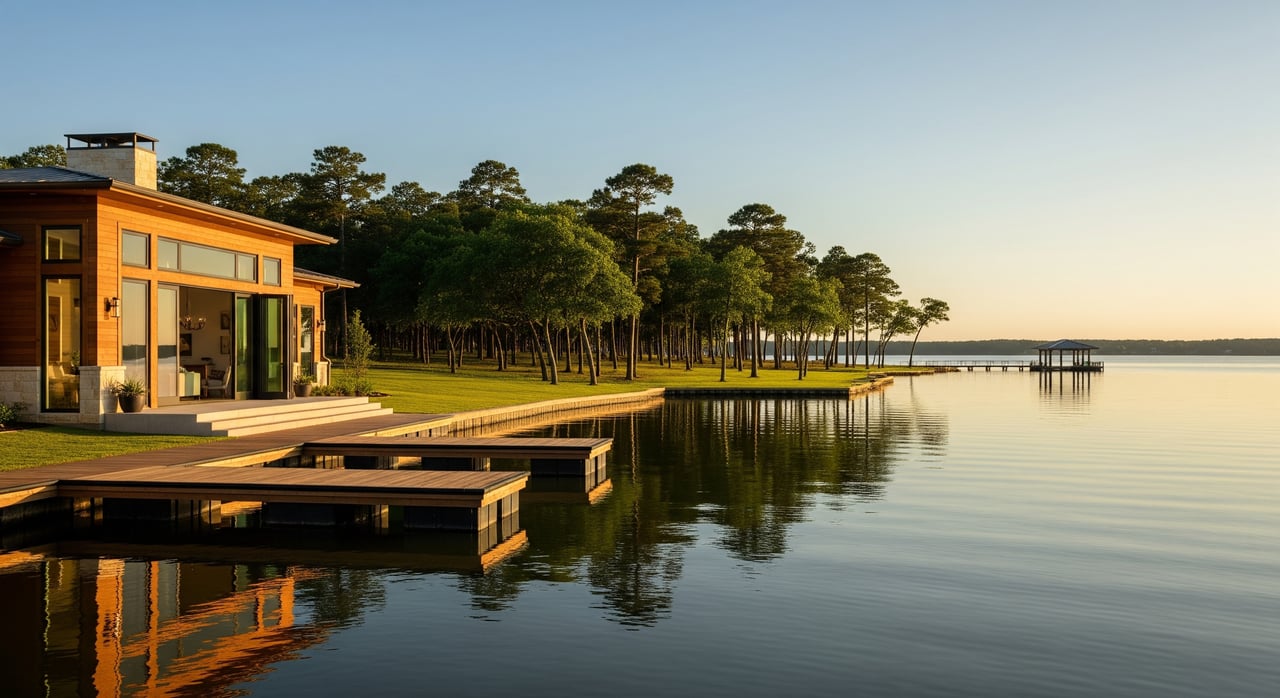
Picture yourself stepping onto a quiet dock at sunrise or strolling down to a private community ramp with a coffee in hand. If you are searching around Flint and the Lake Palestine corridor, you will hear two terms a lot: lakefront and lake access. Each offers a different lifestyle, cost profile, and day-to-day experience.
This guide breaks down how these options work in our local market, what they truly cost to own, and how to pick the one that fits your routine. You will learn about permits, maintenance, boating convenience, insurance, and resale. By the end, you will have a simple decision framework and a smart checklist to use on any property you tour. Let’s dive in.
What “lakefront” really means here
A true waterfront or lakefront property directly touches the waterline. You typically have a private shoreline and either an existing dock or the right to pursue one, subject to permits. The big advantage is unobstructed views and immediate access. You see the water, hear the wildlife, and can step from your yard to your boat when conditions allow.
On Lake Palestine, the details matter. This is a managed reservoir, so ownership to the waterline and the rules for docks or seawalls can be more complex than on a private, spring-fed lake. You should confirm the exact deed language, survey lines, and any easements before you assume you can build or modify a structure.
What “lake access” homes offer
Lake-access or lake-adjacent homes do not directly front the water. Instead, your access comes from a shared amenity like a community dock, a private boat ramp within the subdivision, or a recorded easement. In other cases, you rely on nearby public ramps.
The experience varies. Some communities offer a short walk or golf-cart ride to a private dock. Others are a short drive to a ramp or marina. You still enjoy the lake lifestyle at a lower entry price, but access and privacy are shared.
Cost and ongoing fees
Purchase price
- Lakefront properties usually command a premium compared to similar off-water homes. That premium is tied to shoreline, view, and dock rights.
- Lake-access properties deliver many lake benefits at a lower initial cost. For many buyers, this trade saves meaningful capital while preserving lifestyle.
Ongoing ownership costs
- Lakefront: Expect higher maintenance for docks and shoreline, potentially higher property taxes because of the premium valuation, and higher homeowners insurance. Flood insurance may be required or recommended depending on the flood zone.
- Lake access: You may pay HOA or community fees for shared docks and ramps. These costs are often more predictable than private shoreline upkeep and can be lower than lakefront maintenance over time.
Financing and appraisal
- Lakefront premiums affect appraisal outcomes and loan structures. Lenders may require extra inspections or flood-zone verification.
- Lake-access homes often appraise differently, with more weight on the home and neighborhood than on shoreline features.
Privacy, view, and lifestyle
Waterfront experience
With lakefront, you typically enjoy unobstructed views and a direct connection to the water. You hear the waves, see wildlife, and feel the lake’s daily rhythm. Privacy can be excellent depending on lot placement and vegetation.
Boat traffic can vary by location. Shorelines near popular routes may experience more noise and wake. Lot orientation and cove versus open-water positioning influence what you see and hear.
Lake-access experience
Lake-access homes can offer quieter residential streets away from shoreline activity. The trade is that community docks and ramps are shared social spaces. If you like meeting neighbors while launching your boat, this can be a plus.
Your privacy around the water depends on how busy the shared amenities are and how access is managed. At home, you may enjoy more separation from boat noise than a busy shoreline might allow.
Boating convenience and water use
Waterfront convenience
The biggest win with lakefront is speed and simplicity. Launching from your own dock saves time and effort, as long as the dock suits your vessel and water depth stays adequate. Some docks are seasonal or suited for certain boat sizes, so match the setup to your boating plans.
Lake-access convenience
Lake-access homes rely on community facilities or nearby marinas and public ramps. The experience comes down to proximity, parking capacity, and ramp crowding at peak times. For many owners who boat on weekends or seasonally, this works well. If you plan to boat every day, the logistics could become a consistent factor.
Practical checks for any property
- Distance and drive time to the nearest ramp or marina
- Availability of slip rentals or reserved spaces
- Water depth, submerged obstacles, and shallow zones near shore
- Speed and wake zones that affect how you use the water
- Seasonal or low-water conditions that change access
Maintenance and shoreline considerations
Lakefront maintenance
Docks, pilings, and seawalls need routine attention and occasional major repairs, especially after storms. You may manage debris, erosion, and shoreline vegetation control. High and low water levels can change how your dock works and when you can use it.
These tasks can add up in both time and cost. They are part of the value of having private water access, and they are predictable responsibilities of lakefront ownership.
Lake-access maintenance
With lake-access homes, most shoreline work is not on your to-do list. Shared amenities shift upkeep to an association, which usually charges fees to cover maintenance and reserves. That means fewer personal maintenance surprises, but it also means reviewing governance and budgets.
Permits and environmental constraints
On Lake Palestine, you should verify permits for any dock, seawall, or shoreline changes. Depending on the project, authorities can include Smith County or local planning departments, state water quality and fisheries agencies, and federal regulators for certain structures. The exact requirements vary by location and scope, so confirm before you assume rights to build, alter, or remove anything.
Legal, title, and insurance essentials
Riparian and access rights
Always review the deed and a current survey to see where the lot ends, how it meets the waterline, and whether easements affect access. Reservoirs add complexity to shoreline ownership and structures. A title company and a local attorney can help you interpret rights and responsibilities for docks and foreshore areas.
Easements and HOA covenants
Community docks and ramps depend on recorded easements and association rules. These documents spell out who can use facilities, guest policies, and how maintenance is funded. Ask for covenants, budgets, recent meeting minutes, and any known special assessments.
Floodplain and insurance
Check the FEMA flood map for the specific parcel and ask for an elevation certificate if one exists. Waterfront properties are more likely to sit in higher flood zones than lake-access homes. Insurance premiums reflect flood zone, elevation, and building characteristics, so get quotes early.
Resale and timing
Lakefront resale
Waterfront homes have strong appeal, though the buyer pool is smaller because prices are higher. Resale value depends on view, water depth, dock condition, shoreline stability, and clear access rights. Keeping permits and maintenance records organized helps maximize value.
Lake-access resale
Lake-access properties often attract a broader pool because they are more affordable and lower maintenance. If the community amenities are well maintained and access is convenient, these homes can sell well to buyers who want the lake lifestyle without the higher cost and upkeep of private shoreline.
Seasonal dynamics
Around Lake Palestine, demand often shifts with the seasons and with the mix of vacation and full-time residents. Listings can see more activity when the weather invites boating and fishing. Timing your sale or purchase to local rhythms can improve results.
Quick decision matrix
Use these four priorities to guide your choice:
- Budget: How much can you invest up front and yearly?
- Boating frequency: Daily, weekly, or seasonally?
- Maintenance tolerance: Hands-on dock and shoreline care or shared amenities?
- Privacy: Private shoreline and views or a quieter street with shared water access?
Three common buyer profiles:
- The Daily Boater: You plan to be on the water several times a week. A well-sited lakefront lot with a suitable dock likely fits best.
- The Weekend Relaxer: You want low effort, easy access, and a social vibe at the lake. A lake-access community near a private ramp or marina can be the sweet spot.
- The Budget-Savvy Planner: You value the lake lifestyle but want to protect capital. Lake access offers a lower price point with many of the same experiences.
Due diligence checklist for Lake Palestine buyers
Bring this list to showings and during the option period:
- Title and survey: Confirm deed language for waterline ownership and recorded easements. Request a current survey that shows exact boundaries.
- Dock and shore rights: Verify whether a dock exists, who owns it, and if it is permitted. Ask what maintenance or replacement is allowed.
- Permits and restrictions: Request permit history for docks, seawalls, or shoreline work. Check local planning records. Review HOA rules, fees, and guest policies for lake-access communities.
- Flood risk and elevation: Review FEMA maps and ask for an elevation certificate. Ask the seller about recent flood or storm impacts.
- Insurance implications: Get quotes for homeowners and flood insurance for that parcel. Validate what your lender may require.
- Utilities and septic: Confirm septic status, well or water service, and any lake-specific maintenance considerations.
- Proximity to services: Note drive times to the nearest public ramp, marina services, emergency care, and shopping in Flint or Tyler.
- Physical characteristics: Check water depth at the dock area, look for signs of erosion, and ask about predominant wind and wave exposure.
- Community context: For lake-access homes, confirm parking at the shared dock or ramp, slip waitlists, budgets, and any special assessments.
- Market comps: Ask your agent for recent waterfront and lake-access sales near your target area. Compare per-linear-foot of shoreline along with home square footage.
- Local history: Ask about lake level changes, major storms, and any known disputes over access or maintenance.
Next steps
You have two good paths on Lake Palestine: pay more for instant, private water access or pay less and share access with predictable costs. The right choice depends on how often you will use the lake, your budget for maintenance, and your preferred balance of privacy and convenience.
If you want a local, high-touch advisor who knows how to source both on-market and off-market opportunities along the Flint and Lake Palestine corridor, connect with Jana Dillard. With deep East Texas expertise and a proven track record with lakefront and lifestyle properties, Jana will help you compare options, confirm permits and rights, and negotiate with confidence.
FAQs
What is the difference between lakefront and lake access on Lake Palestine?
- Lakefront lots touch the waterline and may include a private dock or dock rights with permits, while lake-access homes use shared community amenities or nearby public ramps.
Do I need a permit to build or repair a dock on Lake Palestine?
- Most docks, seawalls, and shoreline changes require permits, which can involve local, state, or federal authorities depending on location and scope.
Are waterfront homes more likely to need flood insurance?
- Waterfront parcels are more likely to sit in higher flood zones than lake-access homes; check FEMA maps and get insurance quotes for the specific address.
How do HOA rules affect lake-access properties?
- HOA documents govern who can use shared docks or ramps, set fees, and outline maintenance responsibilities, so review covenants, budgets, and meeting minutes.
What should I check about water depth and boat size?
- Confirm water depth at the dock area, any shallow zones or obstacles, and whether the dock suits your vessel size and seasonal water levels.
What maintenance is unique to lakefront ownership?
- Expect ongoing care for docks and shoreline structures, plus attention to erosion, debris, vegetation control, and storm-related repairs.