Buying land near Tyler can feel exciting right up until you realize that a beautiful tract is not always a build-ready tract. If you are dreaming about a custom home with room to spread out, lake access, or a quieter East Texas setting, you need more than a good view and the right price. You need to know what can actually be built, what approvals may be required, and what costs could show up later. That is where smart due diligence makes all the difference. Let’s dive in.
Why jurisdiction matters first
Before you fall in love with a piece of land near Tyler, confirm where it legally sits. A tract may be inside Tyler city limits, in Tyler’s extraterritorial jurisdiction, or in unincorporated Smith County, and each setting can affect your next steps.
Inside city limits, the City of Tyler handles zoning, permits, and related development review. In the ETJ, the city’s authority is more limited and is focused mainly on subdivision and right-of-way considerations. In unincorporated Smith County, the rules are generally centered on subdivision requirements, flood rules, driveway culverts, and similar county land-use controls.
This is one of the biggest reasons land buyers run into surprises. Two tracts with similar size, price, and location can have very different approval paths based on which side of a boundary line they fall on.
Confirm buildability before price drives the decision
When you are shopping for land, it is easy to focus on acreage, trees, privacy, or proximity to Tyler. Those features matter, but they should come after you confirm the parcel’s buildability.
A practical order matters here. Start with jurisdiction, then move to access and plat status, floodplain review, septic feasibility, utility availability, and permit timing. That sequence can help you avoid buying a tract that looks ideal on the surface but needs costly work or extra approvals before construction can begin.
Check access, platting, and road responsibility
A custom home site needs legal and practical access, not just a pin on a map. If the tract is being carved out of a larger parcel or divided for resale, Smith County says subdivisions generally must be platted, approved by the Commissioners Court, and recorded, with certain exceptions.
That means you should verify whether the parcel already has the proper platting in place or whether additional steps may still be needed. You should also review the survey, boundaries, utility easements, and any rights-of-way tied to the tract.
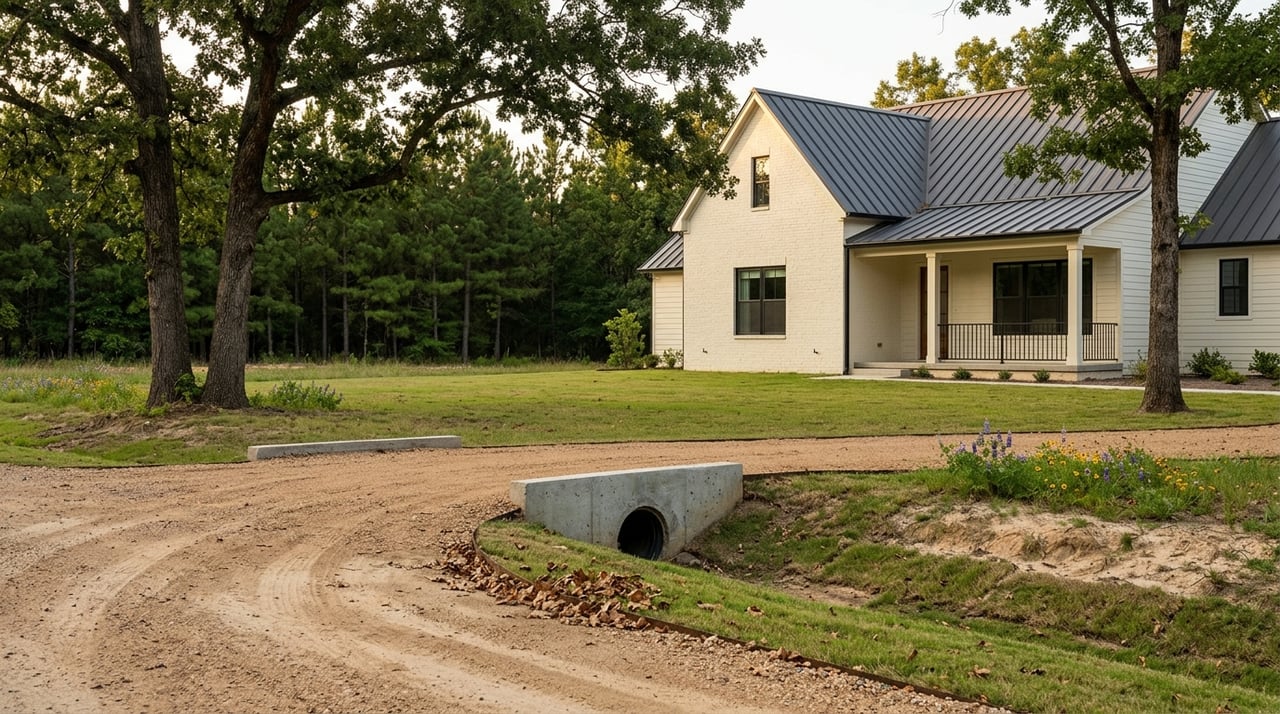
Road access deserves careful attention too. In unincorporated areas, county rules address road acceptance and driveway culverts, and county road acceptance does not automatically mean the county will upgrade a road beyond normal maintenance. In many cases, required road construction is generally the applicant’s expense.
What to verify on access
- Whether the tract has recorded legal access
- Whether it is already platted or needs plat approval
- Whether any easements affect your build area
- Whether driveway culvert requirements apply
- Whether the road is county-maintained or privately maintained
Review floodplain and drainage early
Floodplain issues can change building costs, site layout, and permit requirements. In unincorporated Smith County, flood-damage regulations apply, and development in the floodplain requires a county development permit.
County subdivision rules also require flood-zone lots to show benchmark and finished-floor elevation information. That means flood status is not just a background detail. It can directly affect engineering, elevation planning, and how your home site is designed.
If a parcel has a creek, low area, or drainage path, take a closer look before moving forward. A scenic feature can also bring added review requirements.
Understand septic feasibility and lot size
For many rural custom home sites near Tyler, septic is one of the most important questions. If public sewer is not available, the land must support an on-site sewage facility.
Smith County says the general minimum lot size is a half-acre or larger unless the land was platted before 1989. The county also notes that a licensed installer, along with a registered sanitarian or professional engineer, determines whether the site needs a conventional or aerobic system.
This is why not every rural lot is equal, even if it looks flat and usable. Soil conditions, site layout, and system type can all affect feasibility and cost.
Septic questions to ask
- Does the lot meet minimum size requirements?
- Is public sewer unavailable, making septic necessary?
- What type of system may be required?
- Are there conditions that affect the permitting path?
- Does the tract qualify under the county’s stated 10-acre rule conditions?
Verify zoning if the parcel is in Tyler
If the parcel is inside Tyler city limits, zoning should be one of your first checks. Do not assume a custom home, modular home, workshop, or accessory structure will automatically be allowed.
Tyler’s planning resources provide zoning district information and permit applications, and the city notes that zoning changes typically take 45 to 60 days. The city also states that modular homes still must meet zoning, setback, and code requirements.
That timing matters if you are trying to coordinate land closing, design work, and a builder schedule. A tract inside the city may offer utility advantages, but it may also come with a more defined review process.
Confirm utilities tract by tract
Utility availability should never be assumed from a Tyler mailing address alone. A parcel may be near developed areas and still require more work than expected to connect services.
Water and sewer are usually the first questions. Tyler Water Utilities maintains the distribution system through the customer meter, handles new water taps through city personnel or approved contractors, and processes new service requests through the Water Business Office. The city also warns that online water and sewer line maps can be outdated, so parcel-level confirmation with staff is important.
Electric service also needs tract-specific review. Oncor publishes its Texas service-area map, but you still need to confirm whether service is already nearby or whether additional line work could be required.
If natural gas matters to your build plan, verify that before closing as well. Gas service should be checked for the exact tract rather than assumed based on nearby addresses.
Utility items to confirm
- Water availability at the parcel
- Sewer availability or need for septic
- Electric proximity and possible line-extension needs
- Natural gas availability, if desired
- Utility easements that may affect the homesite
Know the permit path and timing
Even when a tract checks many boxes, timing still matters. If your parcel is inside Tyler and city approvals are needed, the city runs permits, inspections, zoning applications, and plan submissions through its online systems.
Tyler says prescreening for a building permit can take up to two business days. Residential permit review is about five business days once documents are correct, and first subdivision plat reviews are typically completed within 10 business days.
The city also says building permits are valid for six months from issue. If you plan to buy land well before construction starts, that detail matters when you are thinking through your timeline.
Build your due diligence team early
Land purchases often need a more specialized team than a typical home purchase. Depending on the tract, you may need a surveyor, civil engineer, and septic professional or registered sanitarian before you can fully evaluate the site.
That is especially true for acreage, rural parcels, or land near water where access, drainage, easements, and utility placement can all affect the final homesite. Bringing in the right professionals early can help you make a confident decision before you commit.
A local real estate advisor can also help you sequence the process the right way. That can save time, reduce guesswork, and keep you focused on land that truly fits your goals.
A practical checklist for buying land near Tyler
If you are comparing custom home sites near Tyler, keep this list handy:
- Confirm whether the parcel is inside Tyler city limits, in the ETJ, or in unincorporated Smith County
- Review the plat, survey, rights-of-way, and utility easement information
- Verify legal access, road frontage, and road responsibility
- Check flood status and any floodplain development requirements
- Confirm septic feasibility, lot size, and permitting path
- Verify water, sewer, electric, and natural gas availability for the exact tract
- If the parcel is inside city limits, verify zoning and permit timing before closing
Why local guidance matters with Tyler-area land
Buying land for a custom home is different from buying an existing house. With land, many of the biggest answers are not visible during a showing. They come from maps, records, utility verification, county rules, and city review timelines.
That is why working with someone who understands Tyler, Smith County, acreage tracts, and lifestyle property can be so valuable. You want clear advice, a thoughtful process, and someone who can help you spot issues before they become expensive surprises.
If you are exploring land near Tyler for a custom home build, Jana Dillard can help you evaluate the right tract with a smart, local approach.
FAQs
What should you check first when buying land near Tyler for a custom home?
- First, confirm whether the parcel is inside Tyler city limits, in the ETJ, or in unincorporated Smith County, because that affects which rules and approvals may apply.
Does land in unincorporated Smith County need to be platted?
- If the tract is being created from a larger parcel or divided for resale, Smith County says subdivisions generally must be platted, approved, and recorded, with some exceptions.
Can you assume a rural lot near Tyler will support septic?
- No. Septic feasibility depends on the tract’s size, site conditions, and the evaluation of a licensed installer with a registered sanitarian or professional engineer.
Do you need to check floodplain status before buying land near Tyler?
- Yes. Floodplain status can affect permits, site design, finished-floor elevation requirements, and overall build costs.
Should you assume utilities are available because the property has a Tyler address?
- No. Water, sewer, electric, and natural gas should all be confirmed for the exact tract before you close.
What zoning questions matter for land inside Tyler city limits?
- You should verify the zoning district, permitted uses, setback requirements, and whether your planned home or accessory structures fit the city’s rules.