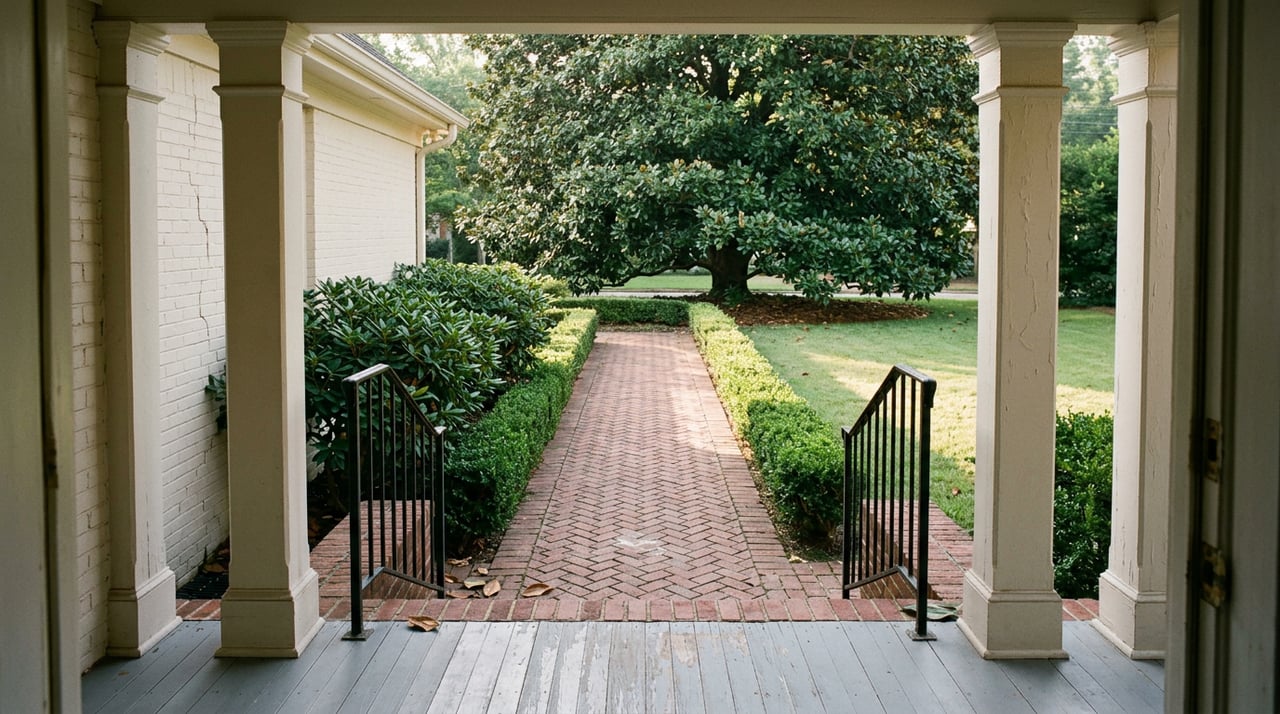
A buyer looking at a 1930s Colonial on one of Azalea's brick streets often makes the same assumption before they've even toured the house: since the neighborhood carries a federal historic designation, restoring the place must come with a tax break. It seems like the obvious trade. You take on the maintenance of original windows and heart-pine floors, and the government meets you partway.
It doesn't work that way, and the reason is worth understanding before you write an offer. Historic Tyler Inc. explains that the federal and state preservation tax credits that help offset restoration costs are only available to income-producing properties. If you plan to live in the home, you're not eligible in Texas, no matter how much original material you preserve or how carefully you match the trim. The National Register listing itself, which the Azalea Residential Historic District has held since June 2003, doesn't restrict what you can do to the house either. You don't need federal permission to add square footage, rewire a kitchen, or repaint. The designation is largely honorific at the federal level. Whatever oversight you'll actually run into comes from somewhere else entirely, and that's the first sign that in this neighborhood, the label on a number rarely matches what the number does.
The same pattern shows up somewhere buyers feel more directly: the price.
Three Portals, Several Very Different Price Snapshots
If you've been comparing listing sites while shopping the Azalea District, you may have already noticed the numbers don't line up. They don't line up because they're each catching a different, small slice of a market that doesn't behave like a typical subdivision.
| Source and window | Reported figure | What it measures |
|---|---|---|
| Redfin neighborhood data, most recent month reported in February 2026 | $277,000 median sale price | Down 7.2% year over year |
| Trailing 12 months through September 2025 | $381,000 median sale price | Up 10% from the prior 12 months |
| Active listings snapshot, September 2025 | $429,000 median list price | Same eight listings on market that month |
| Active listings, August 2026 | $499,000 median list price | $173 median price per square foot |
Four legitimate readings of the same neighborhood, taken within roughly a year of each other, and none of them agree. That's not a data error. It's what happens when you compare medians drawn from small samples of both closed sales and active listings.
The Azalea District holds roughly 950 historic homes spread across 36 distinct sections, built mostly in the first half of the 20th century in styles ranging from Queen Anne and Craftsman to Colonial Revival and Tudor. Homes.com listed the active price range last September as $199,900 to $1,699,900. That's not a typo. It's the honest spread of a district where an unrenovated original sits a few blocks from a home that's been gutted to the studs and rebuilt with imported marble and a wet bar.
When only a handful of homes close in a given month, whichever end of that spread happens to sell moves the median hard. Two or three fully restored estates closing in the same window will pull the number up. A run of smaller, original-condition cottages will pull it down. Neither move tells you the neighborhood is appreciating or cooling. It tells you which homes happened to trade.
The Steadier Signal Is Price Per Square Foot
If the median is noisy, price per square foot is where the real story sits, because it normalizes for size and lets you compare a 1,600-square-foot cottage to a 3,200-square-foot showpiece on the same basis.
By that measure, the Azalea District has been climbing consistently. Redfin's data put the median price per square foot at $118 as of early 2026, up 26.9% year over year. Movoto's later snapshot from August 2026 showed $173 per square foot on active listings. Go back further, to a 2022 compilation of neighborhood sales data, and per-square-foot values in the district were running closer to $71. Whichever exact figure you land on in a given month, the direction across several years is the same: renovated square footage in this district has gotten steadily more expensive, even in months when the median sale price itself was falling.
That distinction matters if you're pricing a sale or sizing up an offer. A seller whose home sold below the trailing median shouldn't assume the market turned against them. A buyer comparing two listings shouldn't lean on the neighborhood's median at all. The unit that tells you something reliable is dollars per square foot, adjusted for the home's actual condition, not the sale price of whatever happened to close last month.
The Second Label That Doesn't Mean What It Looks Like
Circle back to the oversight question, because it has a similar twist. The National Register listing, again, imposes no renovation restrictions from Washington. But part of the Azalea District overlaps with the City of Tyler's Heritage Neighborhood #1 Overlay District, a local designation that does carry real design and demolition oversight enforced by the city itself. If your prospective purchase carries a red rose plaque as a local historic landmark, or falls inside that overlay boundary, changes to the exterior and any demolition plans go through city review, separate from anything the federal listing requires.
In other words, the paperwork that actually constrains what you can do to the house isn't the impressive-sounding federal one. It's the more localized one, and it's worth confirming which designation, if any, applies to a specific address before you assume either the freedom or the restriction that a national listing implies.
Historic Tyler Inc., the nonprofit that stewards the city's preservation districts, is the clearest place to check both the overlay boundaries and the maintenance realities of owning a home this old. Their guidance on foundation movement in East Texas clay soil, seasonal upkeep, and material preservation is written for exactly this kind of buyer.
What Holds the Demand Together
None of this pricing noise has cooled interest in the neighborhood, and it's worth understanding why, because it's not incidental to the numbers above. Azalea District homes sold in an average of 44 days as of last year's data, faster than the national average. Part of that is the architecture. Part of it is what surrounds the houses.
Bergfeld Park sits at the center of the district, its amphitheater hosting a season of free evening concerts from the East Texas Symphony Orchestra alongside tennis courts and a skatepark. A few streets over, Pyron Garden remains a privately maintained residential garden open to walkers, with a stream, sculptures, and a path that's become a fixture of the annual Azalea & Spring Flower Trail each March and April. On the retail side, Brady's Coffee Shop anchors a lot of residents' mornings, and dinner options within walking distance run from Rick's on the Square to Stanley's Famous Pit Barbecue. None of that shows up in a median-price calculation, but it's a real part of why demand for a 950-home historic inventory stays steady even when the sale price data bounces around from month to month.
What This Means If You're Transacting Here
If you're selling a home in the district, don't treat one month's median as a verdict on your pricing. Ask what actually closed that month and how it compares to your home's condition and square footage, not to a citywide or district-wide average built from a handful of sales.
If you're buying, budget the restoration the way the tax rules actually work, not the way they sound. If you intend to occupy the home, plan for renovation costs without a preservation tax credit offset. If you're considering the property as a rental or another income-producing use, that changes the calculation and the credit becomes worth investigating with a tax professional.
And before you finalize plans for an addition or an exterior change, confirm whether the address sits inside the Heritage Neighborhood #1 Overlay District or carries a local landmark designation. That answer determines what you actually need approval for, regardless of what the National Register plaque suggests.
A Few Questions Worth Asking Before You Make an Offer
Does the National Register listing mean I need federal approval to renovate? No. The listing carries no renovation restrictions from the federal government. Any approval requirements come from local designations, not the national one.
Can I get a historic preservation tax credit if I plan to live in the home? Not in Texas. The federal and state credits apply only to income-producing properties. Owner-occupied residential properties are excluded.
Why do different listing sites show such different median prices for the same neighborhood? The Azalea District has a small number of monthly sales spread across an unusually wide range of home conditions and sizes, from untouched originals to fully rebuilt estates. A handful of high-end closings in a given month can swing the median by tens of thousands of dollars without reflecting a broader market shift.
Pricing a historic home accurately, or making an offer on one with clear eyes about the maintenance and paperwork ahead, takes more than a portal snapshot. If you're weighing a move into the Azalea District or getting ready to list a home there, Jana Dillard can walk you through what the recent sales in your specific block actually looked like and what they mean for your plans. Book a consultation to get a read on the district that goes past the median.
This article is general information, not legal, tax or financial advice. Consult a qualified professional about your situation.